
Navratri and Its Spiritual Importance in Jeeva Nadi Astrology
Navratri is one of the most sacred festivals in the Hindu spiritual tradition. The word Navratri literally means “nine nights”, and during these nine nights devotees worship the divine feminine power known as Shakti. Across India and many parts of the world, Navratri is celebrated with devotion, prayer, fasting, and spiritual practices.
From an astrological perspective, Navratri is not only a religious festival but also a cosmic period of spiritual transformation. According to Jeeva Nadi Astrology, the energy of the universe changes significantly during Navratri. These nine days are believed to open powerful spiritual channels that help individuals purify their karma and strengthen positive planetary influences.
Jeeva Nadi astrology emphasizes the connection between cosmic energies, karma, and divine consciousness. During Navratri, the vibrations of the universe become highly supportive for spiritual growth, inner transformation, and karmic healing.
In this article, we will explore the importance of Navratri in Jeeva Nadi Astrology, how it affects planetary energies, and why these nine days are considered extremely powerful for spiritual remedies.
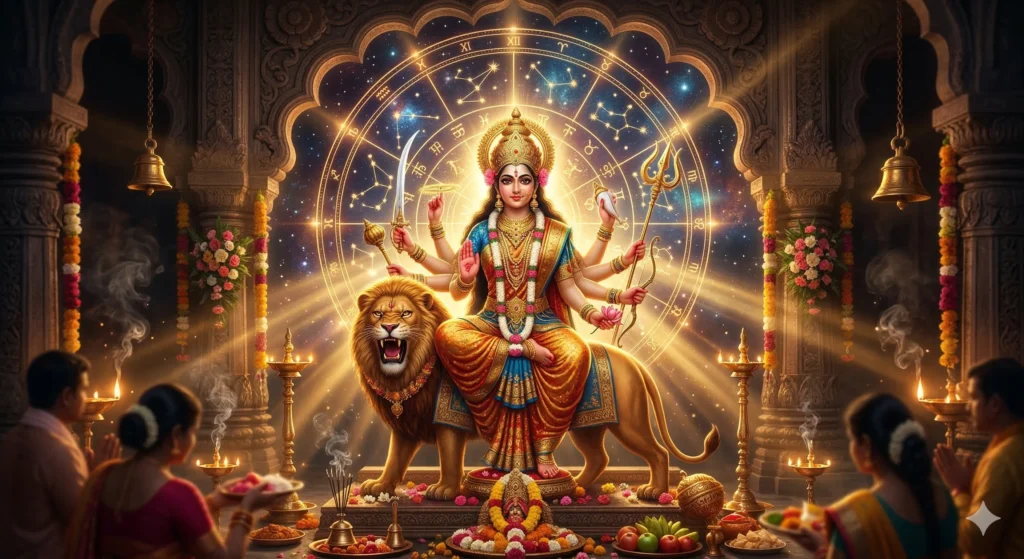
In astrology, every time period carries a unique cosmic vibration. Certain days and planetary alignments create stronger spiritual opportunities.
Navratri occurs during specific periods when solar and lunar energies shift, creating a powerful environment for spiritual awakening.
In Jeeva Nadi Astrology, the universe is seen as a living consciousness, where every planet, star, and cosmic force interacts with human life. The term “Jeeva” means life force or living energy. This philosophy believes that divine energy flows continuously through all living beings.
Navratri represents a period when this life force energy becomes more active, allowing individuals to reconnect with divine consciousness.
The Role of Divine Feminine Energy
In Jeeva Nadi Astrology, Shakti (divine feminine power) plays an essential role in maintaining cosmic balance. The universe functions through two primary energies:
Shiva (consciousness)
Shakti (creative energy)
During Navratri, the Shakti energy becomes highly active. This divine feminine force is worshipped in nine different forms known as Navadurga.
Each form represents a unique spiritual quality such as courage, wisdom, protection, and transformation.
These nine forms are:
Shailaputri
Brahmacharini
Chandraghanta
Kushmanda
Skandamata
Katyayani
Kalaratri
Mahagauri
Siddhidatri
In Jeeva Nadi Astrology, these forms symbolize different stages of spiritual awakening within the human soul.
Planetary Energies During Navratri
Astrology teaches that planets influence human experiences. During Navratri, certain planetary energies become more receptive to spiritual practices.
Moon (Chandra)
The Moon governs emotions, intuition, and the subconscious mind. Navratri often begins during important lunar phases. This enhances emotional purification and spiritual sensitivity.
Venus (Shukra)
Venus represents beauty, love, harmony, and divine feminine energy. During Navratri, Venus energy aligns with the worship of Goddess Durga, Lakshmi, and Saraswati.
Mars (Mangal)
Mars represents courage and strength. Goddess Durga is often associated with Mars-like energy because she represents the power that destroys negativity and protects righteousness.
Jupiter (Guru)
Jupiter symbolizes wisdom and spiritual knowledge. During Navratri, Jupiter energy supports learning, meditation, and devotion.
Navratri as a Period of Karma Cleansing
According to Jeeva Nadi Astrology, many of life’s challenges are related to karmic patterns. Karma represents the consequences of past actions.
Navratri is considered a powerful time for karmic purification. Spiritual practices performed during these nine days are believed to reduce negative karmic influences.
Common practices include:
mantra chanting
meditation
fasting
charity
temple worship
These practices help align an individual’s energy with divine forces.
According to Jeeva Nadi Astrology, many of life’s challenges are related to karmic patterns. Karma represents the consequences of past actions.
Navratri is considered a powerful time for karmic purification. Spiritual practices performed during these nine days are believed to reduce negative karmic influences.
Common practices include:
mantra chanting
meditation
fasting
charity
temple worship
These practices help align an individual’s energy with divine forces.
According to Jeeva Nadi Astrology, many of life’s challenges are related to karmic patterns. Karma represents the consequences of past actions.
Navratri is considered a powerful time for karmic purification. Spiritual practices performed during these nine days are believed to reduce negative karmic influences.
Common practices include:
mantra chanting
meditation
fasting
charity
temple worship
These practices help align an individual’s energy with divine forces.
Spiritual Significance of Each Navratri Day
Each day of Navratri represents a different spiritual lesson.
Day 1 – Shailaputri
Represents stability and grounding. Devotees seek strength to begin spiritual transformation.
Day 2 – Brahmacharini
Symbolizes discipline and devotion.
Day 3 – Chandraghanta
Represents courage and protection against negativity.
Day 4 – Kushmanda
Associated with cosmic creation and divine light.
Day 5 – Skandamata
Represents motherhood and nurturing energy.
Day 6 – Katyayani
Symbolizes strength and determination.
Day 7 – Kalaratri
Destroys fear and negative energies.
Day 8 – Mahagauri
Represents purity and spiritual cleansing.
Day 9 – Siddhidatri
Grants spiritual wisdom and fulfillment.
From a Nadi astrology perspective, these nine stages represent the journey of the soul from ignorance to enlightenment.
Navratri and Personal Transformation
Navratri is not only about external rituals. It also represents an inner spiritual journey.
According to Jeeva Nadi Astrology, individuals must overcome inner obstacles such as:
fear
anger
greed
attachment
ignorance
The nine nights symbolize the gradual removal of these negative qualities.
By the end of Navratri, devotees are believed to experience renewed spiritual energy and clarity.
Astrological Remedies During Navratri
Many astrologers recommend performing remedies during Navratri because cosmic energies are more supportive.
Some common remedies include:
Charity
Donating food or clothes helps reduce karmic burdens.
Meditation
Meditation strengthens mental clarity and intuition.
Fasting
Fasting purifies the body and mind.
Prayer
Prayer creates a connection with divine consciousness.
Jeeva Nadi Astrology teaches that remedies are most effective when performed with sincerity and devotion.
Navratri and Spiritual Awakening
For spiritual seekers, Navratri represents a powerful opportunity for awakening.
The festival reminds us that the universe is guided by divine intelligence and cosmic harmony.
Through devotion, meditation, and positive actions, individuals can align themselves with this universal energy.
Conclusion
Navratri is much more than a festival. It is a sacred cosmic period that allows individuals to connect with divine feminine energy and purify their karmic patterns.
In the philosophy of Jeeva Nadi Astrology, Navratri represents the awakening of the soul and the strengthening of spiritual consciousness.
By understanding the deeper meaning of Navratri and performing spiritual practices during these nine nights, individuals can invite peace, prosperity, and spiritual growth into their lives.
Ultimately, Navratri teaches us that the true victory is the victory of light over darkness, wisdom over ignorance, and divine energy over negativity.
